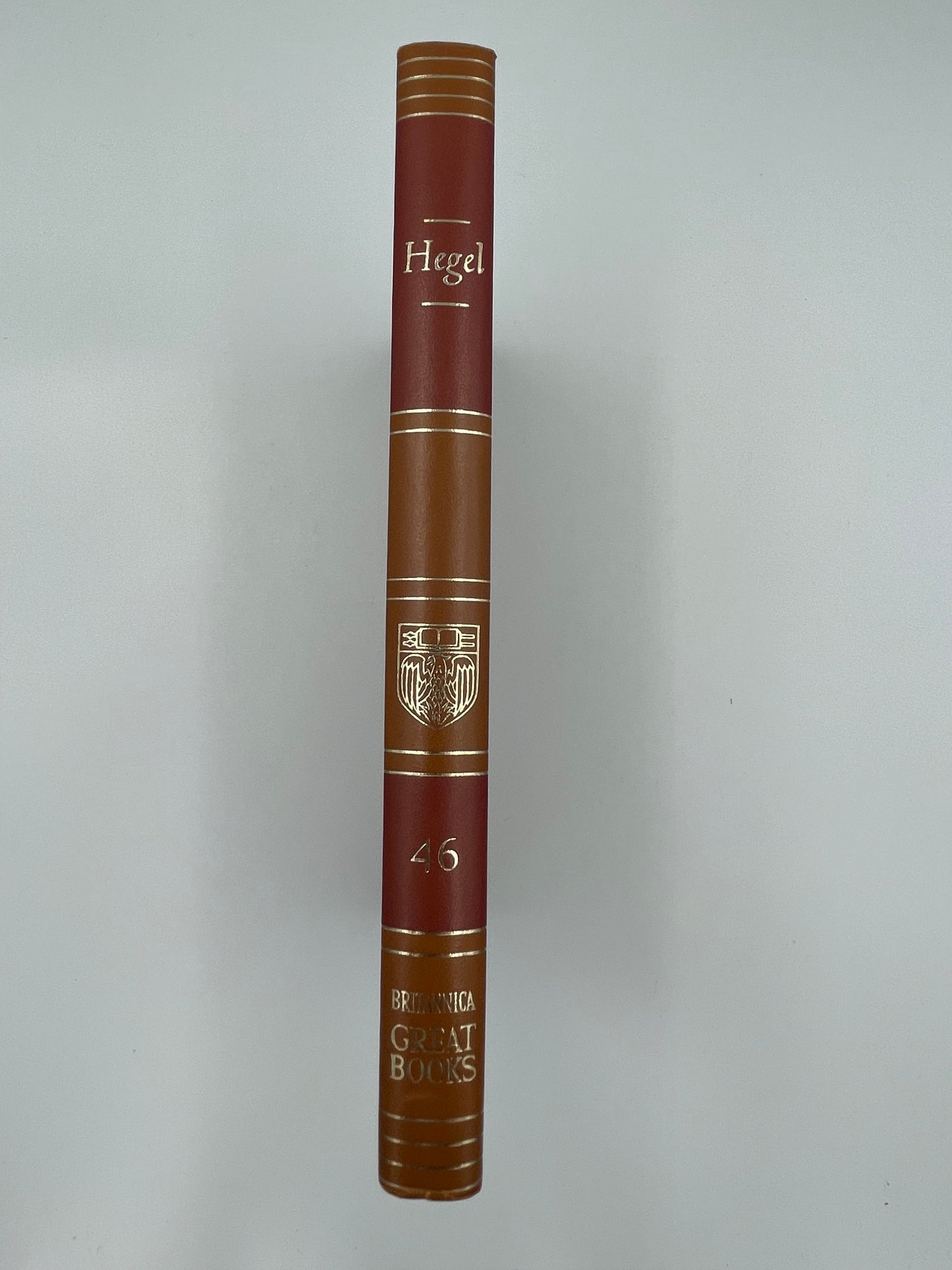
Author: Hegel
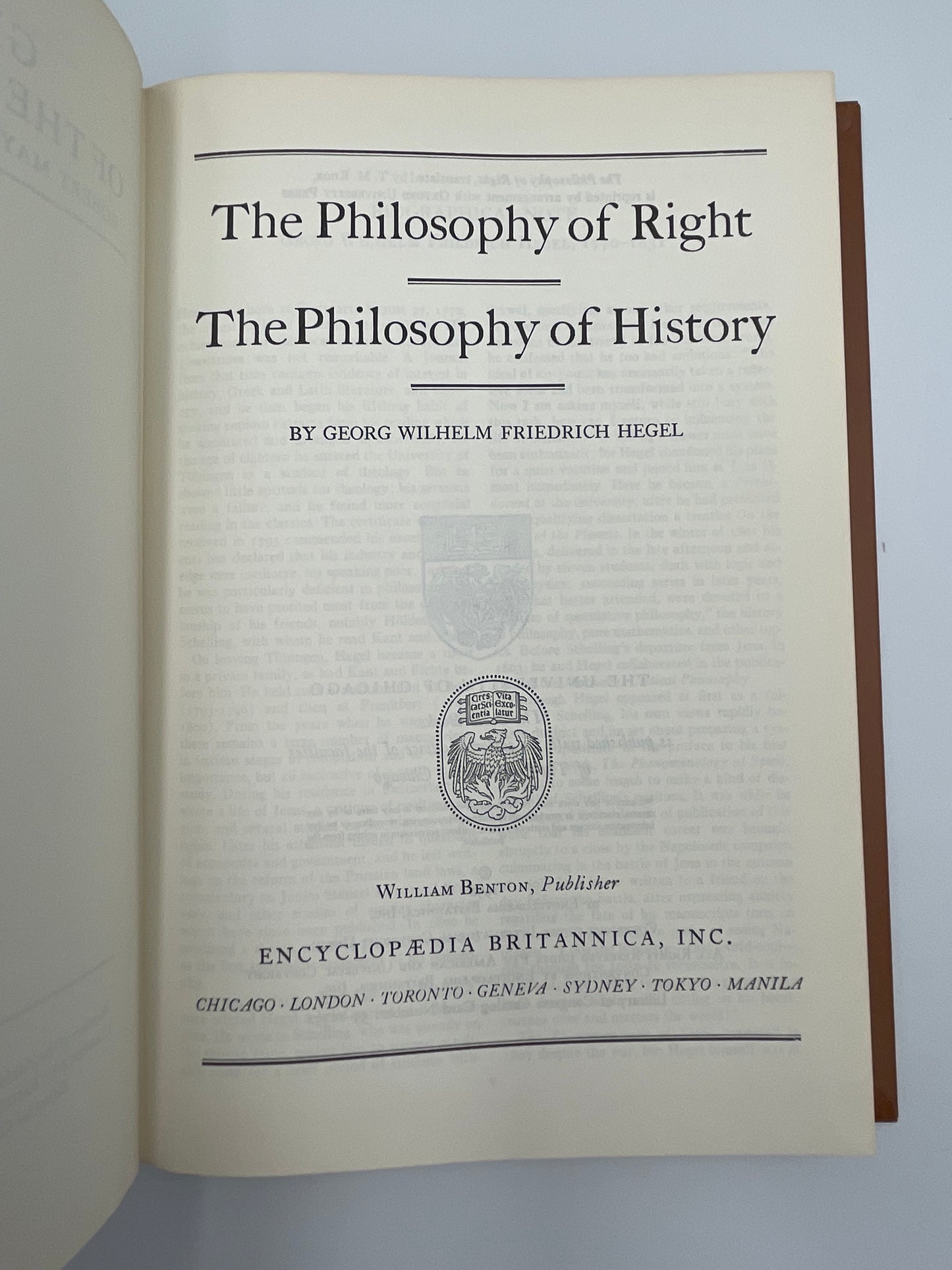
Title: Hegel: The Philosophy of Right. The Philosophy of History (Britannica. Great Books of the Western World)
Publisher: Encyclopaedia Britannica
Year: 1952
Format: Hardcover
Condition: Very Good
Weight: 571 g
Dimensions: 17 x 24 x 2 cm
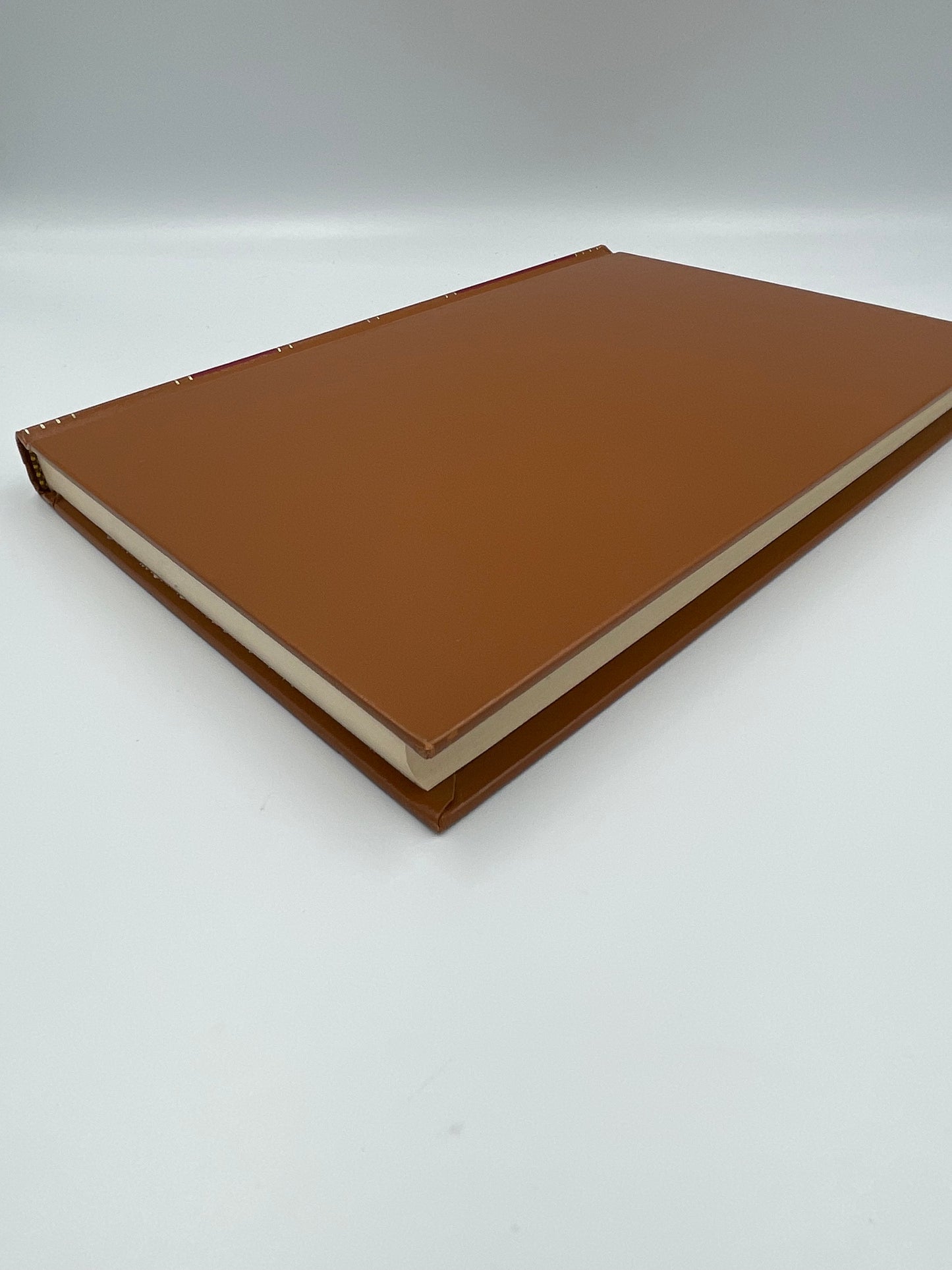
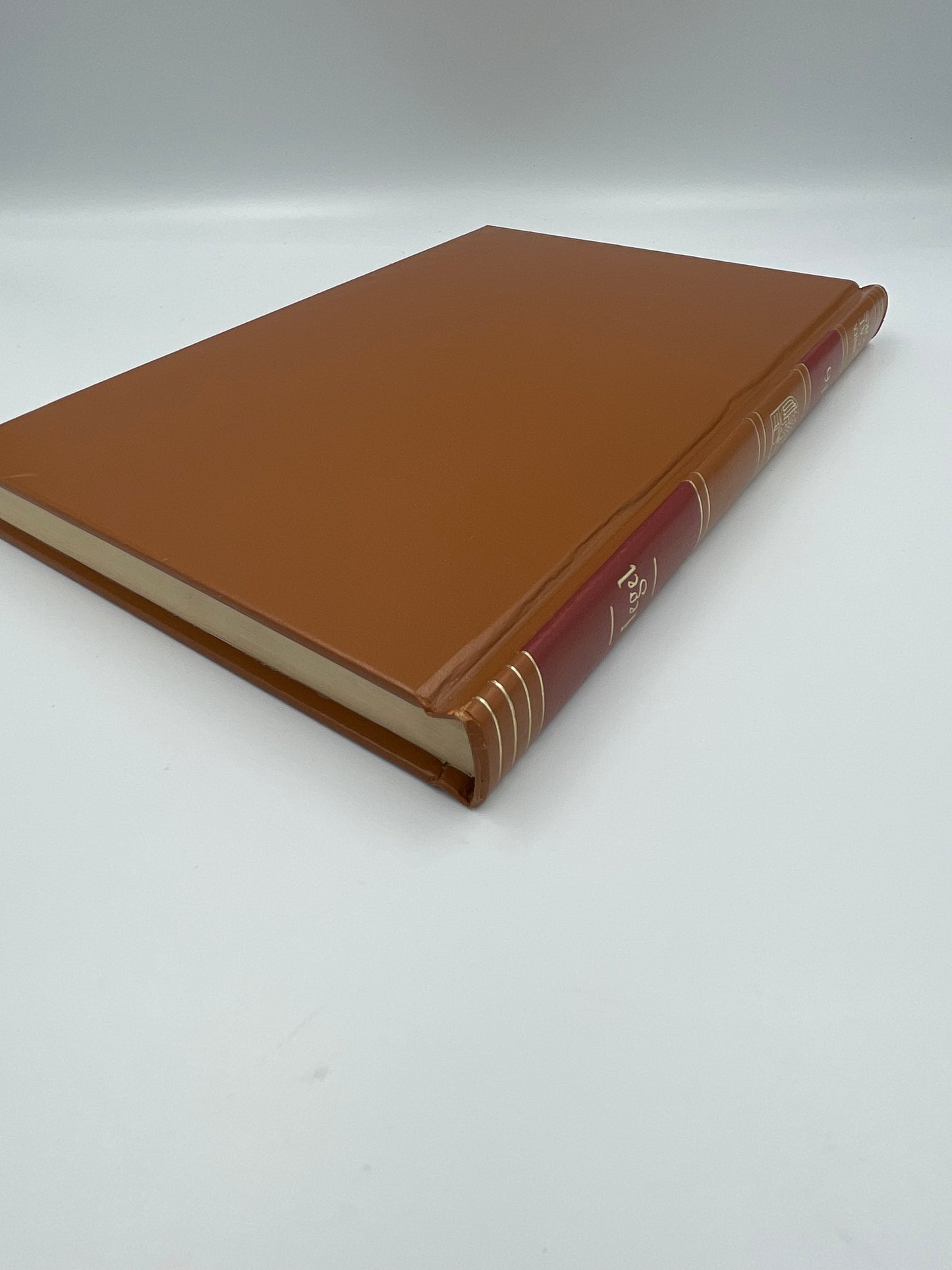
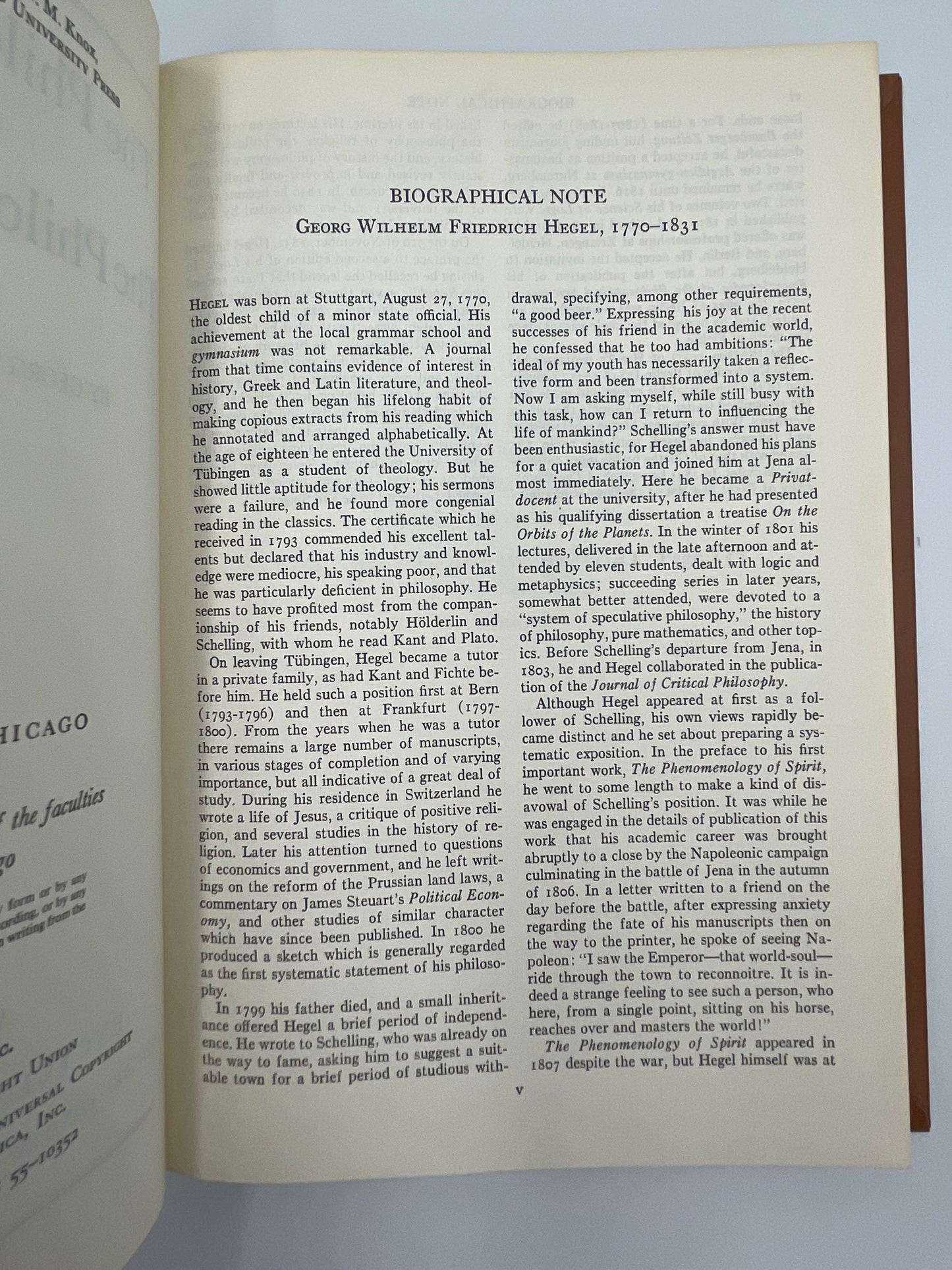
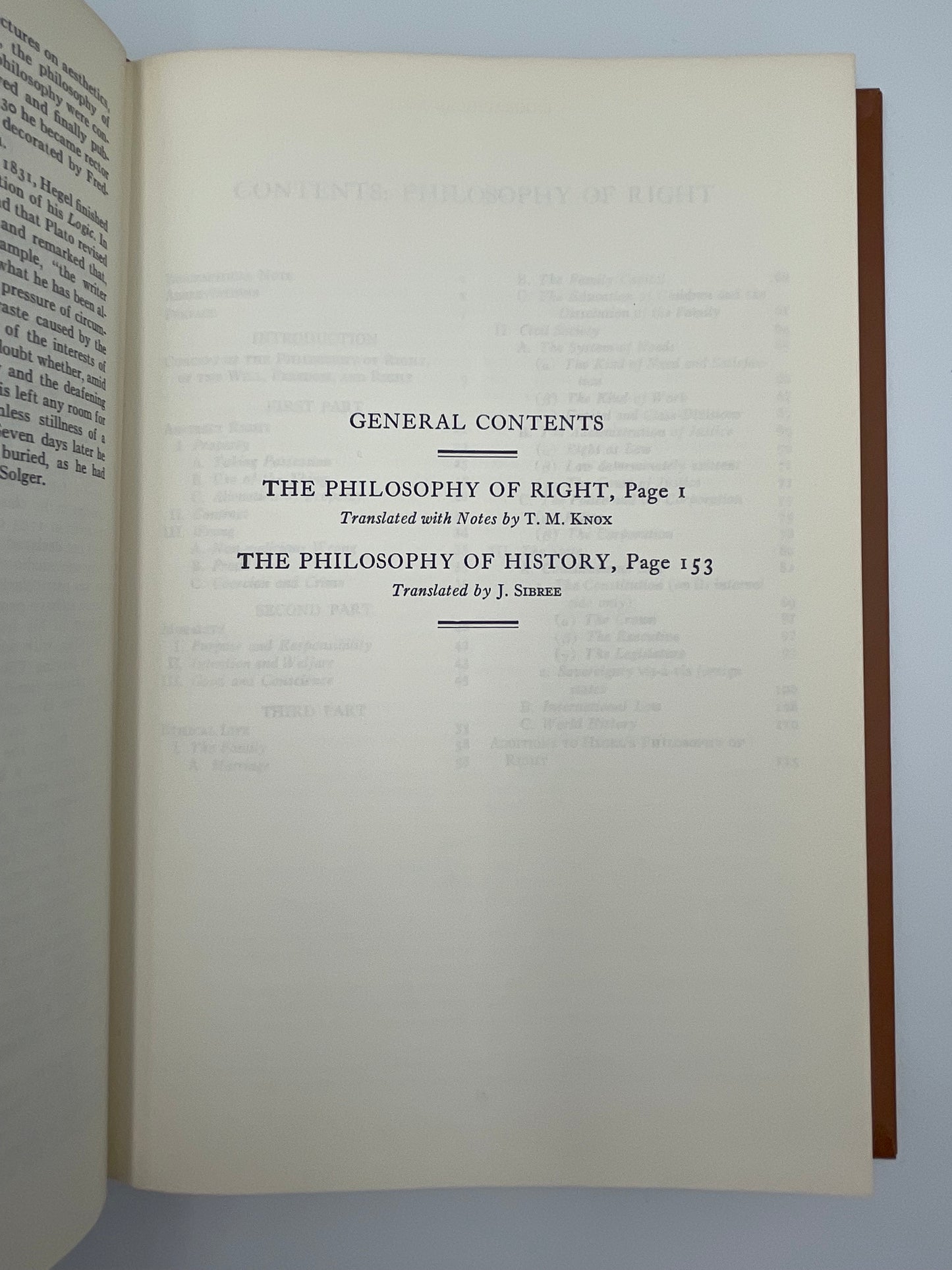
Full brown leatherette (1952), gilt spine, Smyth-sewn. Part of the Great Books of the Western World series by Encyclopaedia Britannica, edited with guidance from the University of Chicago.
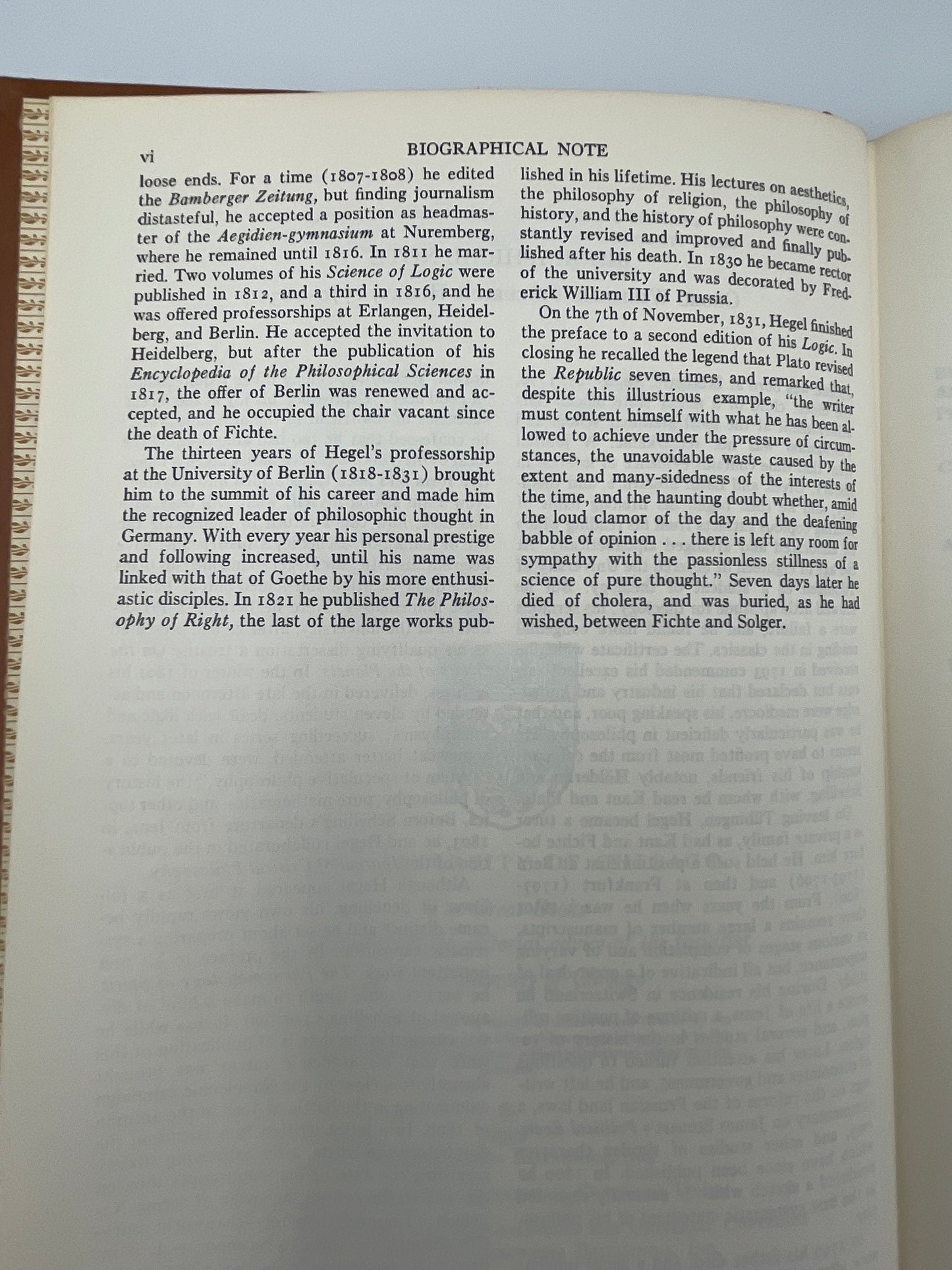
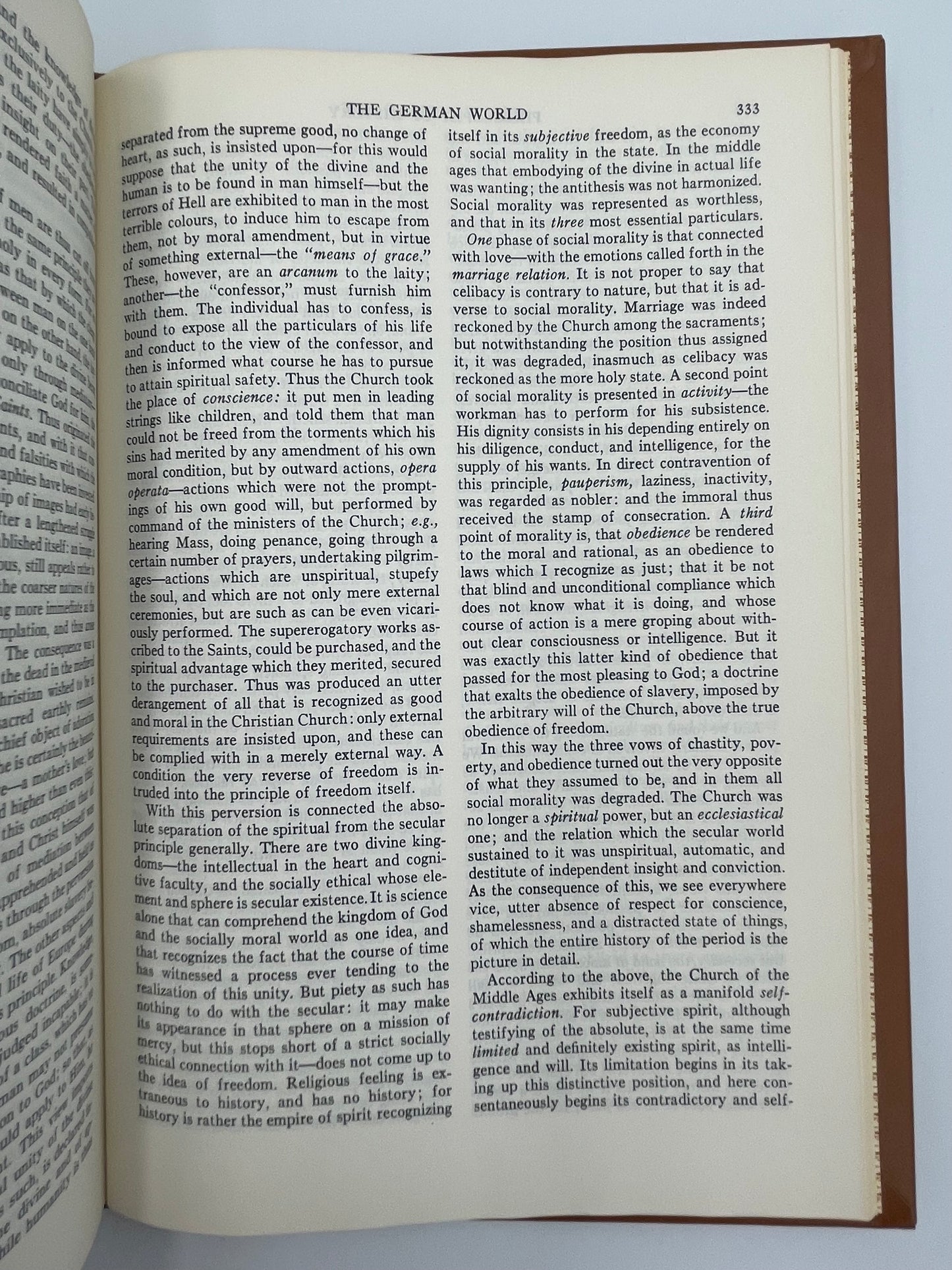
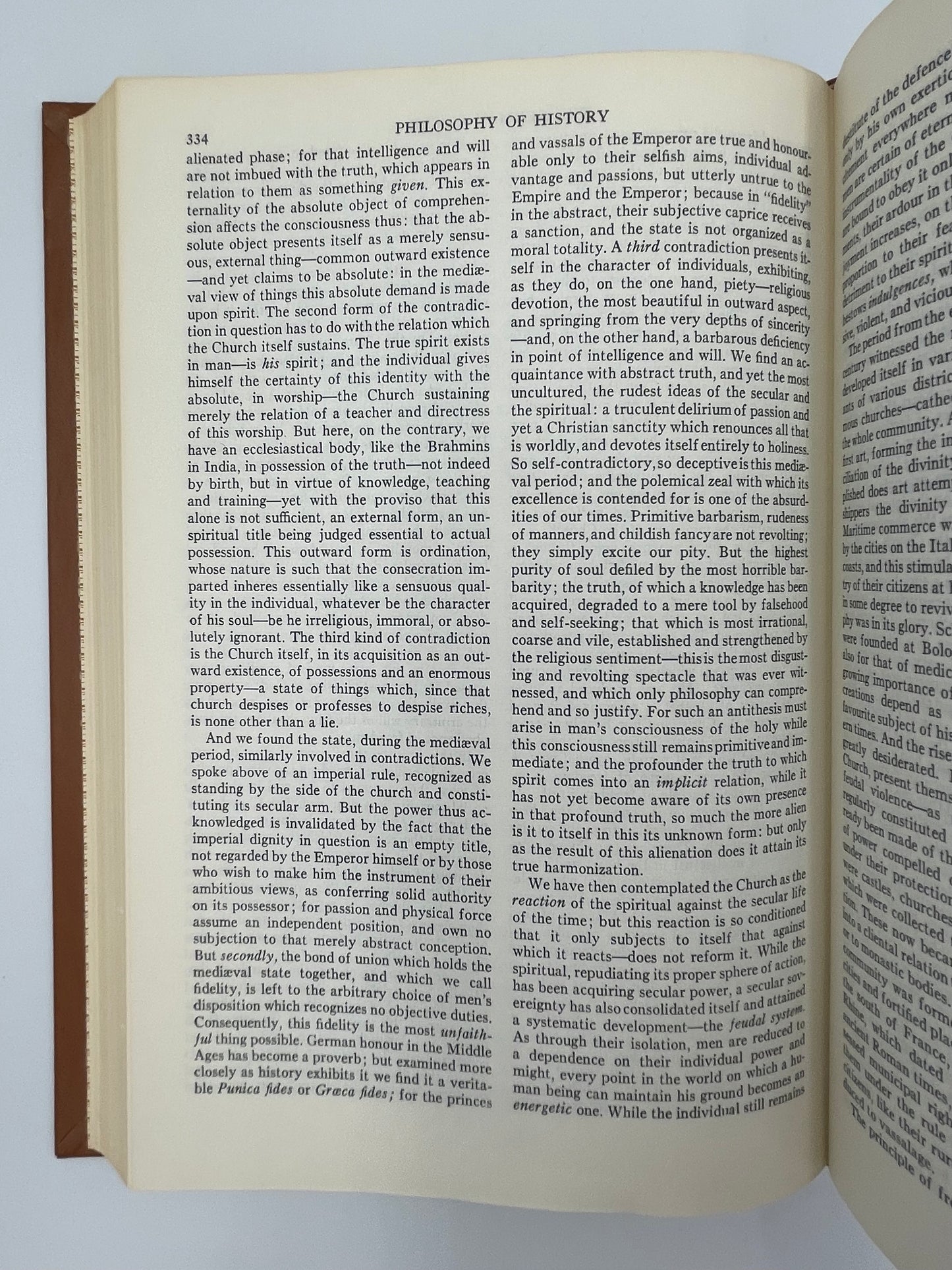
Hegel's "The Philosophy of Right" and "The Philosophy of History" are pivotal texts in Western philosophy, shaping discussions on ethics, politics, and the interpretation of history. They continue to inspire debate and scholarship across various disciplines, reflecting Hegel's enduring influence on modern thought.
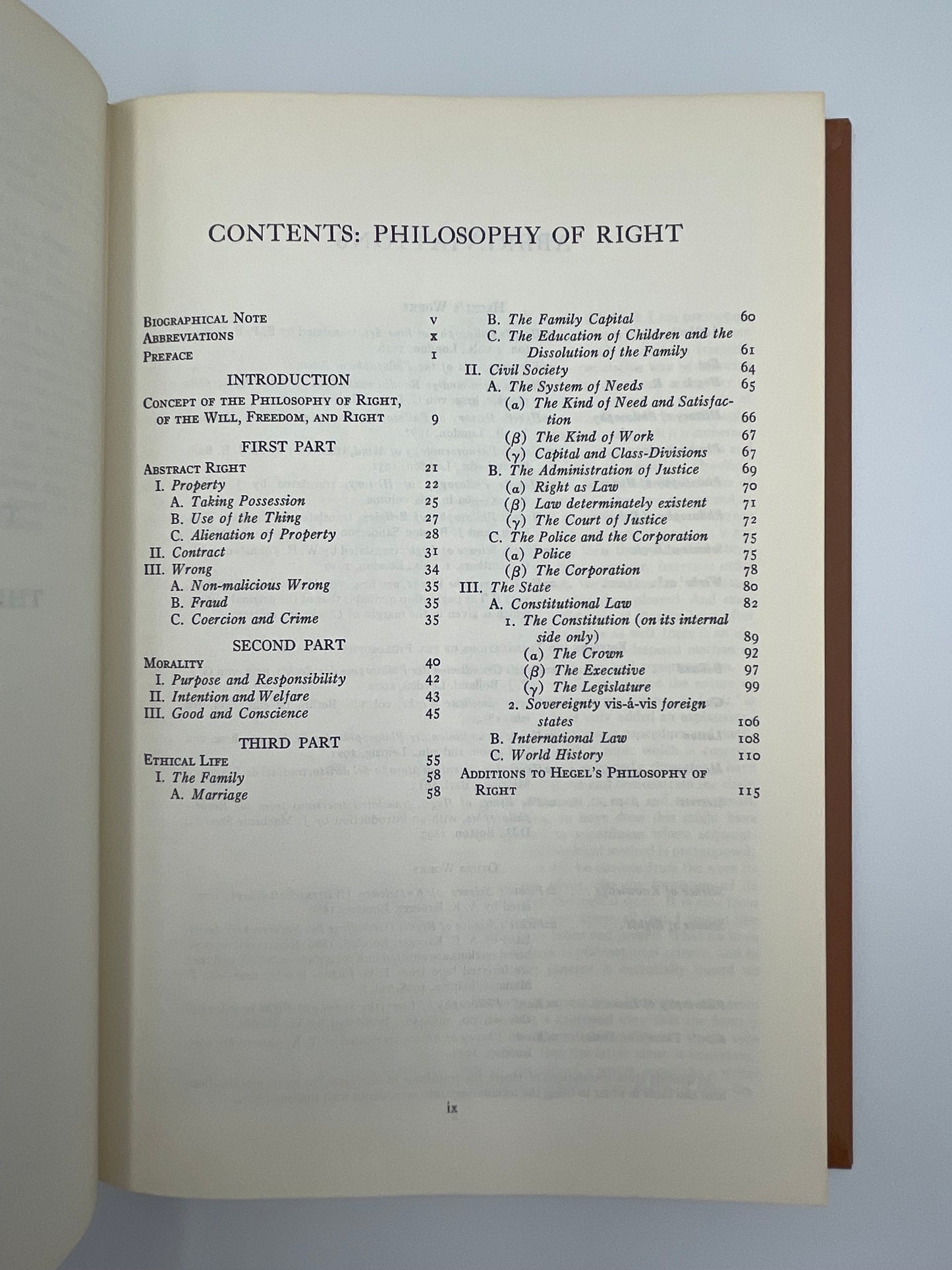
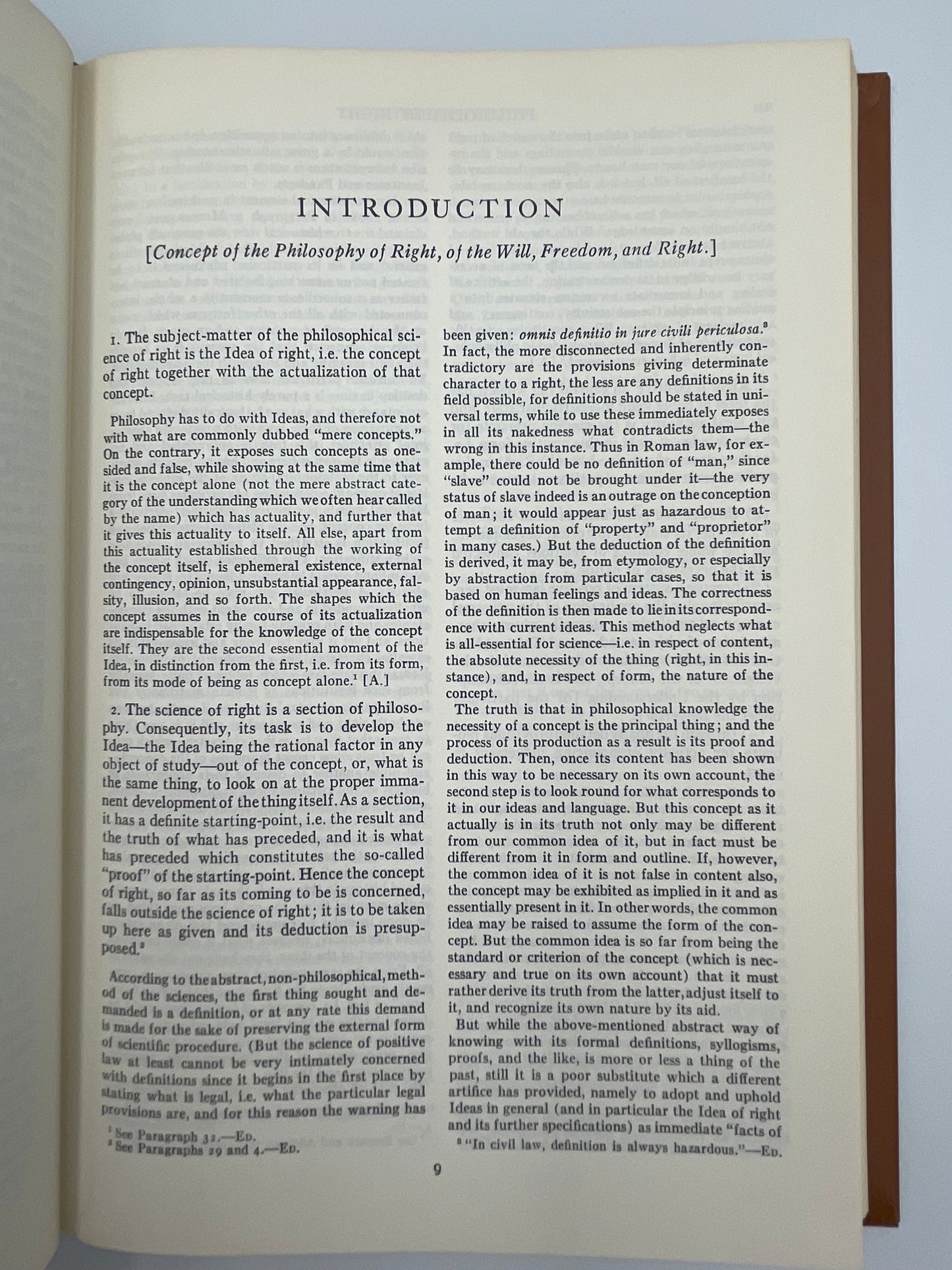
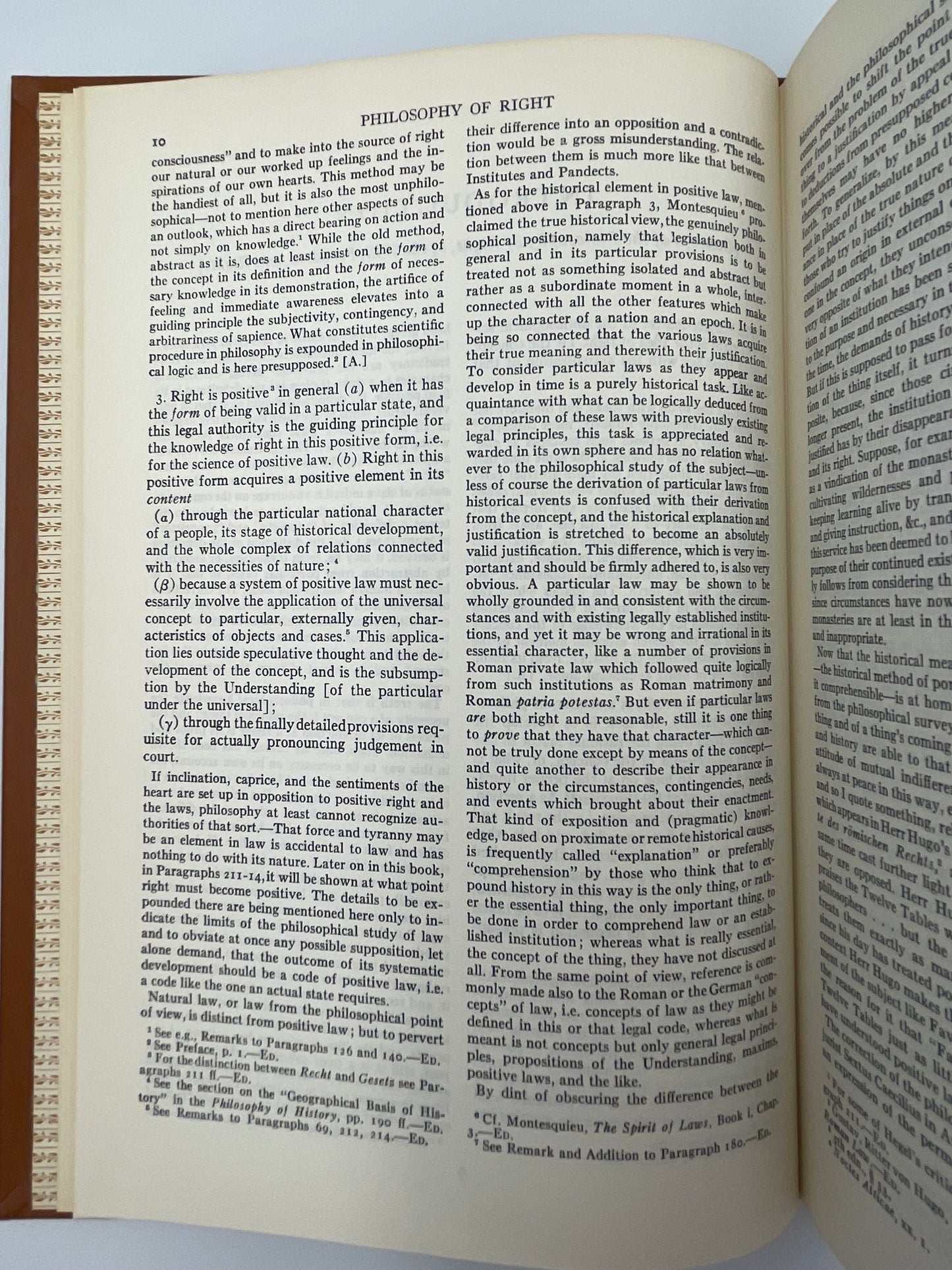
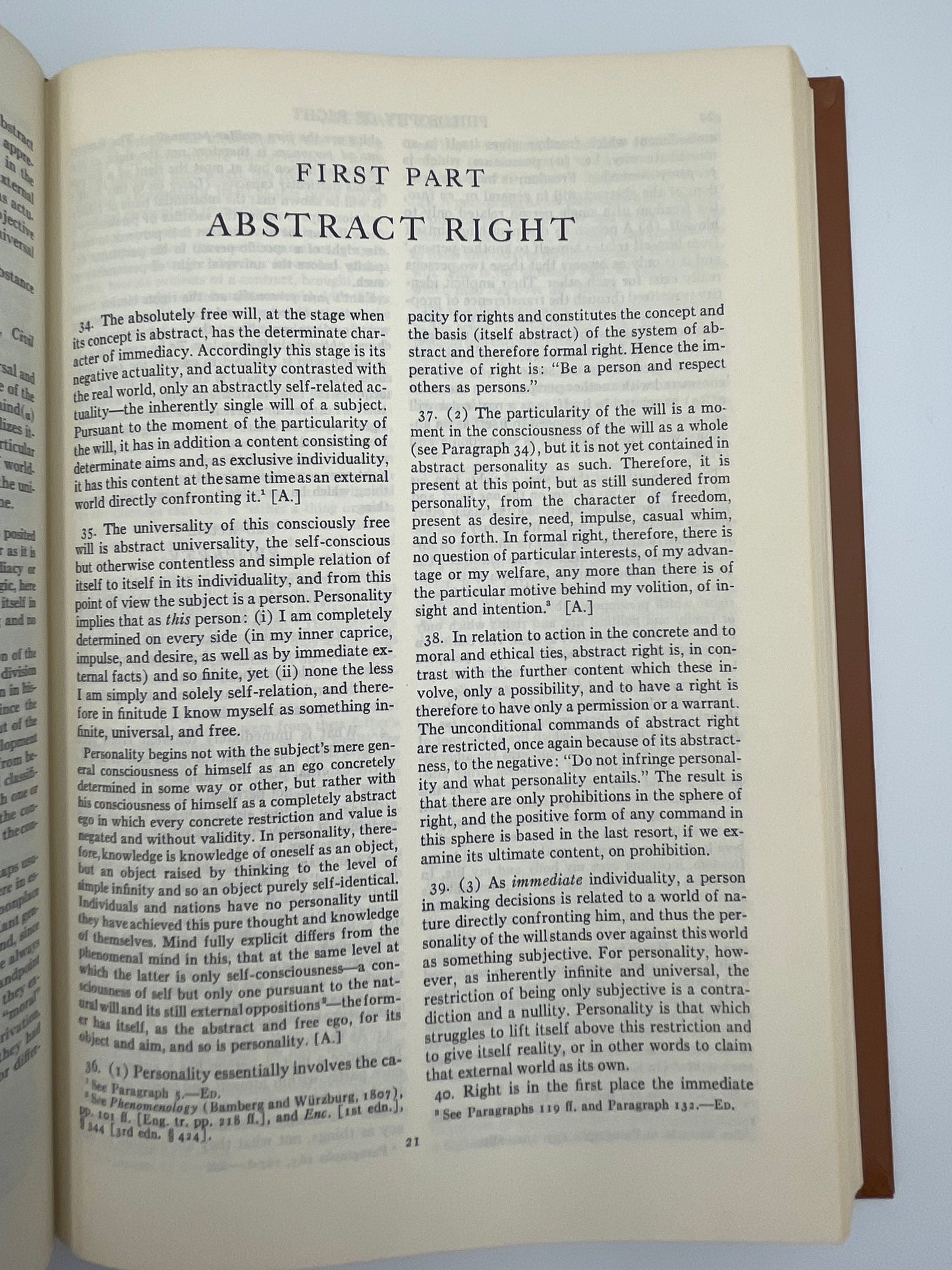
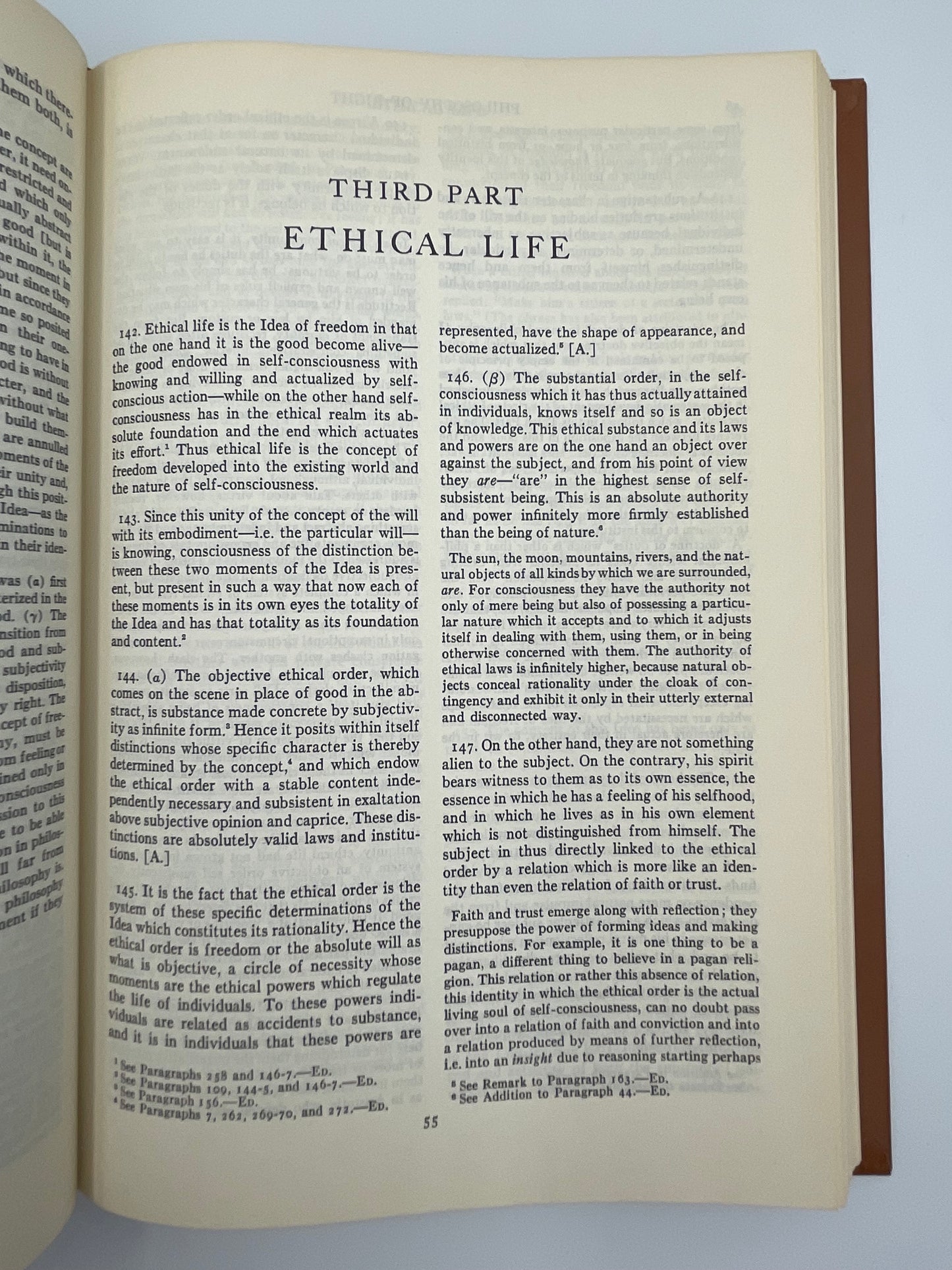
Hegel's "The Philosophy of Right" outlines his views on ethical life, law, morality, and the state. It presents a comprehensive theory of how individuals relate to society and the state, emphasizing the role of freedom, rationality, and ethical duty. It influenced political philosophy significantly, especially in understanding the nature of the state and its ethical foundations. Hegel's concept of the state as an ethical entity with a central role in realizing freedom has shaped debates on political theory and governance.
Hegel's "The Philosophy of History" proposes a dialectical view of history where the development of human societies progresses through conflict and resolution (thesis, antithesis, synthesis). It aims to uncover the underlying rationality in historical processes. This work transformed the way history is studied, moving away from a mere chronology of events to a philosophical exploration of the development of human consciousness and freedom. Hegel's ideas influenced later philosophers, including Marx and Engels, who adapted his dialectical method to develop historical materialism.